

Flutter for IoT and IIoT : Building Real-Time Smart Device Applications
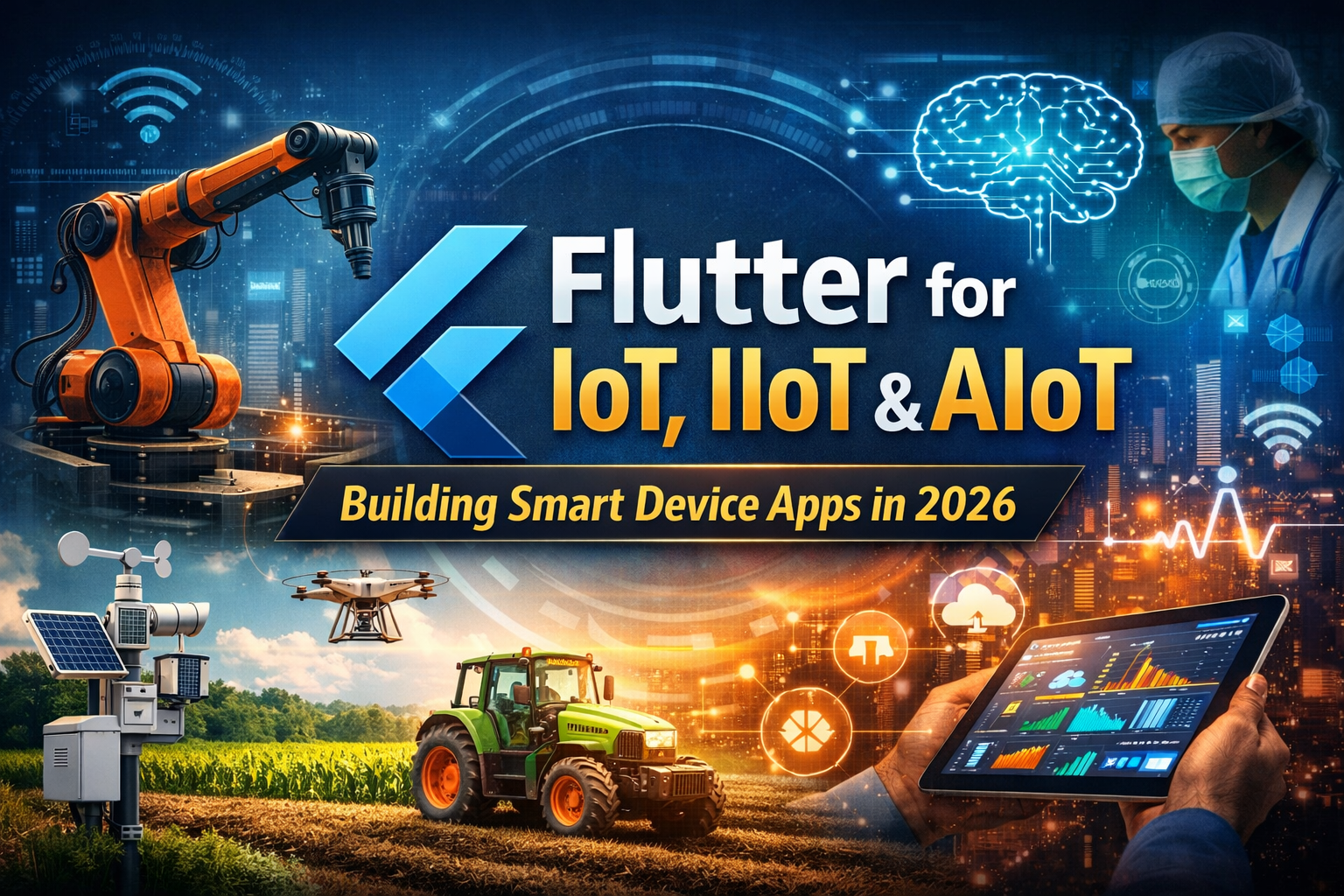
The Internet of Things (IoT) ecosystem is expanding rapidly across industries including agriculture, manufacturing, logistics, healthcare, utilities, and smart infrastructure. As connected devices generate real-time data streams, organizations increasingly require reliable, scalable, and cross-platform mobile applications to monitor, control, and analyze this data.
Flutter, Google’s cross-platform UI framework, has emerged as a strong candidate for building IoT-facing applications due to its performance, flexibility, and multi-platform support. This article explores how Flutter can be used effectively in IoT, Industrial IoT (IIoT), and AIoT (Artificial Intelligence of Things) environments, along with architecture strategies, challenges, pros and cons, and future demand trends.
Understanding IoT, IIoT, and AIoT
1. IoT (Internet of Things)
IoT refers to interconnected devices that collect and exchange data over the internet. Examples include smart homes, wearables, environmental sensors, and tracking devices.
Focus areas:
- Device provisioning
- Cloud synchronization
- User-friendly dashboards
- Alerts and notifications
2. IIoT (Industrial Internet of Things)
IIoT extends IoT into industrial settings such as manufacturing plants, energy grids, water systems, and supply chains.
Focus areas:
- High reliability and uptime
- Industrial protocols (Modbus, OPC UA)
- Secure communication
- Predictive maintenance
- Compliance and audit logs
3. AIoT (Artificial Intelligence of Things)
AIoT combines AI models with IoT data streams to enable intelligent decision-making at the edge or in the cloud.
Focus areas:
- Real-time anomaly detection
- Computer vision on edge devices
- Predictive analytics
- Automated recommendations
What is AIoT and Why It Matters for Flutter Developers?
AIoT (Artificial Intelligence of Things) refers to the integration of AI models with IoT devices to enable intelligent decision-making in real time. Unlike traditional IoT systems that simply collect and transmit data, AIoT systems analyze, predict, and automate actions based on sensor data.
AIoT is becoming one of the fastest-growing segments within the IoT industry due to:
- Edge AI adoption
- Predictive analytics in manufacturing
- Smart agriculture automation
- Intelligent logistics optimization
- AI-powered healthcare monitoring
As AIoT adoption increases, there is rising demand for developers who can build user interfaces that visualize AI-driven insights effectively.
Why Flutter is Suitable for IoT and IIoT Applications
Flutter offers several advantages when building IoT dashboards and device control applications:
- Single codebase for Android, iOS, Web, Desktop
- High-performance rendering engine
- Strong state management patterns
- Rapid UI iteration for device-based workflows
- Good support for real-time streams
Flutter is particularly strong in building:
- Real-time monitoring dashboards
- Field technician mobile apps
- Control panel interfaces
- Tablet-based industrial HMIs
- Smart agriculture applications
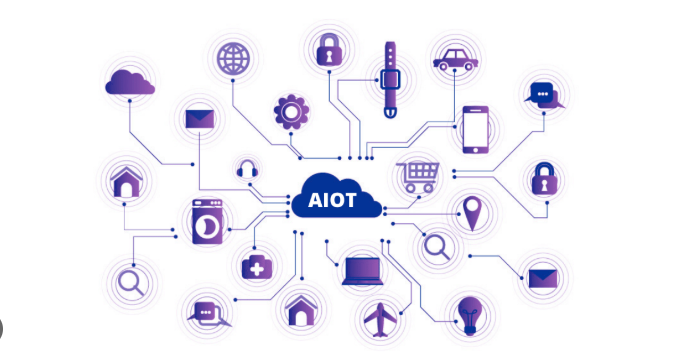
Typical Architecture: Flutter + IoT System
A production-ready IoT architecture usually follows this pattern:
Devices/Sensors → Gateway/Edge → Message Broker → Cloud APIs → Flutter App
Communication Layers
- MQTT (Publish/Subscribe)
- Used for real-time telemetry and command control
- Lightweight and efficient
- Common in both IoT and IIoT systems
- BLE (Bluetooth Low Energy)
- Used for device pairing and short-range communication
- Common in agriculture and consumer IoT
- REST APIs / WebSockets
- Used for configuration, authentication, and data fetching
- Industrial Protocols
- Modbus
- OPC UA
- Usually handled by gateway, not directly by mobile apps
In most industrial systems, Flutter does not directly connect to PLC devices. Instead, gateways translate industrial protocols into MQTT or HTTP for the mobile application.
Sector-Wise Implementation with Flutter
1. Smart Agriculture (IoT + AIoT)
Use Cases:
- Soil moisture monitoring
- Weather station integration
- Automated irrigation systems
- Cold storage temperature monitoring
- Drone-based crop inspection
Flutter Application Features:
- Farm map with sensor nodes
- Real-time soil and temperature graphs
- Alert notifications for threshold breaches
- Manual irrigation override
- AI-based crop health recommendations
Challenges:
- Rural network instability
- Low-end Android devices
- Power fluctuations
- Multiple sensor vendors
Flutter Strength:
- Offline-first architecture
- Lightweight UI
- Real-time data streaming
- Multi-language support
2. Manufacturing (IIoT)
Use Cases:
- Machine status dashboards
- OEE tracking
- Downtime reporting
- Predictive maintenance alerts
- Tablet-based supervisory dashboards
Flutter Implementation:
- Real-time machine telemetry via MQTT
- Role-based access control
- Maintenance approval workflows
- Incident logging
- Data visualization charts
Key Requirements:
- High security (TLS, token rotation)
- Device-level authentication
- Data audit logging
- Reliable background behavior
3. Logistics and Cold Chain
Use Cases:
- GPS tracking
- Temperature compliance monitoring
- Route tracking
- Fleet analytics
Flutter Dashboard Includes:
- Real-time map view
- Temperature trend charts
- Alert logs
- Driver mobile interface
- Offline data caching
4. Healthcare
Use Cases:
- Remote patient monitoring
- Smart medical equipment dashboards
- Hospital asset tracking
Flutter Strength:
- Tablet-based nurse interface
- Cross-platform administrative dashboards
- Secure UI workflows
Limitations:
- Strict regulatory compliance
- Data encryption and privacy requirements
Flutter for AIoT (Edge + AI Integration)
AIoT systems use AI models to analyze IoT data.
Flutter does not typically run heavy AI training. Instead, it:
- Displays inference results
- Shows anomaly scores
- Provides recommendation UI
- Enables human validation workflows
- Visualizes predictive insights
In AIoT systems:
- Edge devices run inference
- Cloud aggregates models
- Flutter visualizes outcomes
Pros of Using Flutter in IoT
- Cross-platform development
- Rapid UI updates
- Strong real-time streaming capability
- Clean dashboard design flexibility
- Suitable for field workforce apps
- Efficient offline-first implementation
Read Articles : Flutter AI App Builder: The Next Evolution of Cross-Platform Product Engineering
Cons and Limitations
- Industrial protocol complexity
- Native bridging sometimes required
- Background execution limitations (especially iOS)
- High-frequency telemetry can cause UI overload
- Security implementation is complex
- Hardware-level debugging is outside Flutter’s core scope
Major Technical Challenges
1. Real-Time Data Overload
Solution:
- Stream throttling
- Server-side aggregation
- Chart buffering techniques
2. Device Heterogeneity
Solution:
- Unified data schema
- Gateway-level normalization
- Versioned APIs
3. Offline Sync Conflicts
Solution:
- Local database caching
- Conflict resolution policies
- Clear sync-state UI indicators
4. Security
Essential Practices:
- TLS encryption
- Certificate pinning
- Role-based access control
- Secure token storage
- Audit trails
Market Demand and Future Outlook
Global IoT market projections consistently show strong growth trends through 2030. The Industrial IoT and AIoT segments are expected to grow at double-digit CAGR rates.
Industry drivers include:
- Industry 4.0 adoption
- Smart agriculture modernization
- Automation and predictive maintenance
- Energy optimization
- AI-powered edge analytics
As IoT devices increase globally, demand for reliable cross-platform monitoring applications will also grow. Flutter developers with IoT protocol knowledge will be positioned in a niche, high-value market segment.
Recommended Skill Stack for Flutter IoT Developers
Core Skills:
- MQTT fundamentals
- BLE communication
- WebSocket streaming
- Offline-first database design
- Secure API integration
Advanced Skills:
- Industrial architecture understanding
- Gateway-based design
- Real-time chart optimization
- Edge AI workflow visualization
- Observability and logging
Read Articles: How to Design Flutter Enterprise App Architecture in 2026: Scalable & AI-Ready App Systems
Future Demand
Flutter developers who combine:
- IoT architecture knowledge
- Security implementation skills
- Real-time streaming UI expertise
- AI integration understanding
will be highly competitive in industrial software, agriculture tech, logistics platforms, and energy analytics startups.
IoT + AI + cross-platform apps represent a strong long-term demand trajectory.
Final Conclusion
Flutter is not just a mobile app framework — it is increasingly becoming a powerful interface layer for IoT, IIoT, and AIoT ecosystems. While it does not replace industrial back-end infrastructure, it excels as the cross-platform real-time visualization and control layer.
Developers who combine Flutter expertise with IoT architecture knowledge will find strong demand opportunities across agriculture, manufacturing, logistics, healthcare, and smart infrastructure sectors in the coming decade.
Read Articles: Flutter Developer Roadmap 2026: Complete Skill Path, Career Scope, and Future Trends
Primary Keyword: Flutter for IoT
Secondary Keywords: Flutter IIoT, Flutter AIoT, Flutter MQTT, Flutter BLE, Flutter industrial IoT app, Flutter real-time dashboard, Flutter smart agriculture app, Flutter edge AI integration
Frequently Asked Questions (FAQ)
Yes. Flutter is highly suitable for IoT dashboards, field applications, and supervisory control interfaces, especially when used with a gateway-based architecture.
Yes. With proper stream management, MQTT integration, and UI throttling techniques, Flutter can handle real-time telemetry efficiently.
Generally, no. Best practice is to use a gateway that translates industrial protocols into MQTT or REST APIs before exposing them to the mobile application.
Yes. Flutter is ideal for visualizing AI inference results, anomaly detection dashboards, and predictive analytics interfaces, although AI model training typically occurs on the edge or cloud.